Denver Broncos vs Washington Commanders Match Player Stats
Introduction
Football fans love numbers. They tell the real story behind every win and loss. The game between the Denver Broncos and Washington Commanders gave us plenty of numbers to talk about. Both teams came ready to play hard. Players left everything on the field. Some had career-best games. Others faced tough moments. But every single player added something special to this matchup.
When we look at the Denver Broncos vs Washington Commanders match player stats, we see more than just numbers. We see hard work paying off. We see young stars rising up. We see veterans showing why they belong in the league. This game had it all. Big plays on offense. Crucial stops on defense. Special teams making their mark too.
I watched every snap of this game closely. The energy felt different from the start. Both teams knew this mattered for their season goals. Quarterbacks tested defenses deep. Running backs fought for every yard. Defenders laid big hits that made the crowd gasp. This was real football at its best.
Let me walk you through everything that happened. We will look at who shined brightest. We will see which stats jump off the page. We will understand why certain plays changed the game completely. Whether you missed the game or just want deeper insight, this breakdown has you covered.
Game Overview and Final Score
The final score showed us how close this battle really was. Both teams traded punches all afternoon. Neither wanted to give an inch. The stadium buzzed with excitement from start to finish. Fans got their money’s worth and then some.
The Denver Broncos came in with something to prove. Their offense had struggled at times this season. But today felt different. The play calling matched what players do best. Receivers found space in coverage. The offensive line gave their quarterback time to throw. When they needed to run, holes opened up at the right moments.
Washington Commanders fans had plenty to cheer about too. Their team fought back every time it looked like Denver might pull away. The defense forced tough situations. Offensive players kept responding to challenges. Special teams flipped field position when the game felt tight.
Looking back at the Denver Broncos vs Washington Commanders match player stats, one thing stands out. Both teams played clean football. Few penalties stopped drives. Turnovers stayed low. When you play this well, the game often comes down to one or two plays. That is exactly what happened here.
The fourth quarter brought non-stop action. Lead changes kept everyone guessing. Big third down conversions extended drives. Defensive stops gave offenses one last chance. In the end, the team that made slightly fewer mistakes walked away happy. But both sides should feel proud of how they competed.
Quarterback Showdown: Passing Stats Comparison
Quarterbacks carry huge responsibility every Sunday. All eyes watch their every move. This game featured two signal callers with different styles but equal determination. Both wanted to prove they belong among the league’s best.
The Broncos quarterback showed great poise in the pocket. Defenders came hard all game. He felt pressure but rarely panicked. His feet stayed alive while eyes looked downfield. When his first read wasn’t open, he calmly moved to the next option. This patience led to several big completions that kept drives alive.
His accuracy stood out on intermediate throws. Those 10 to 20 yard passes often decide games. Too short and drives stall. Too long and turnovers happen. He hit that sweet spot repeatedly. Receivers caught passes in stride, picking up extra yards after catch. That made the offense dangerous on every snap.
On the other side, Washington’s quarterback showed why mobility matters. When protection broke down, he escaped trouble. His legs turned potential sacks into positive plays. Defensive backs had to cover longer because plays extended. This tired out the Broncos defense as the game wore on.
The Denver Broncos vs Washington Commanders match player stats reveal interesting patterns. Both quarterbacks completed passes to eight different receivers. That spreads the ball around nicely. Defenses cannot focus on stopping just one guy when everyone gets involved. Coordinators love seeing that balance.
Deep balls added excitement too. Each quarterback connected on at least two throws over 25 yards. Those chunk plays change field position fast. They also put pressure on opposing offenses to answer quickly. This back and forth made for entertaining football all afternoon.
Running Back Battle: Ground Game Impact
Football purists love watching running backs work. There is something special about seeing a runner fight for extra yards. This game gave us plenty of those moments. Both teams committed to establishing the run early.
Denver’s backfield featured power and speed combined. Their lead runner lowered shoulders and finished runs strong. Defenders bounced off him more than once. But he also showed patience letting blocks develop. This vision separates good backs from great ones. When the hole opened, he hit it without hesitation.
What impressed me most was his second effort. On plays that looked stopped, he kept legs churning. Those extra two or three yards add up over four quarters. They turn 3rd and short into automatic conversions. They wear down defenses mentally too. After four quarters of fighting through tackles, defenders get tired of bringing him down.
Washington countered with a different approach. Their backs used quickness to find cutback lanes. The Broncos defense over pursued at times. That created cutback opportunities for big gains. One play stands out where the back started left, saw nothing, and bounced all the way right for 15 yards. Vision like that cannot be taught.
The Denver Broncos vs Washington Commanders match player stats show balance between run and pass. Both teams rushed over 25 times. That keeps defenses honest. Play action passes work better when safeties creep toward the line. Setting up that balance made the whole offense function smoother.
Third down conversions often came on the ground too. Short yardage situations saw both teams trust their runners. Getting one yard when everyone knows you will run shows toughness. Both offensive lines won those battles enough times to keep scoring drives alive.
Receiving Corps Breakdown and Top Performers
Wide receivers and tight ends make quarterbacks look good. Their routes create separation. Their hands catch passes in traffic. Their legs turn short throws into long gains. This game featured several standout performances from pass catchers.
Denver’s top receiver had himself a day. Defenders tried everything to stop him. Press coverage at the line. Double teams over the top. Physical play downfield. None of it worked consistently. He ran crisp routes that created just enough space. When the ball arrived, he secured it away from his body quickly.
One catch in particular showed his concentration. A defender grabbed his arm before the ball arrived. Most receivers drop that pass or at least lose focus. He kept eyes on the ball, pulled it in, and turned upfield. That kind of focus separates good players from great ones.
The tight end position helped both offenses too. Denver’s tight end found soft spots in zone coverage. Those intermediate throws kept chains moving. On 3rd and medium, he became a reliable target. Quarterbacks trust tight ends in those situations because they know routes and adjust to find openings.
Washington’s receiving group brought speed that challenged Denver’s secondary. Deep threats forced safeties to play cautious. That opened underneath routes for shorter gains. Quick slams and hitches turned into 8-10 yard completions. When those plays happen consistently, offenses stay on schedule.
The Denver Broncos vs Washington Commanders match player stats show multiple receivers with 4+ catches. Spreading the ball keeps everyone happy and engaged. It also gives defensive coordinators headaches trying to predict where passes will go. Both teams executed this well throughout the game.
Defensive Standouts and Key Stops
Defense wins championships. We hear this all the time. But defense definitely wins games on Sunday. Both teams had defensive players who changed outcomes with single plays.
Denver’s linebacker corps flew around all game. Their speed sideline to sideline limited running room. When Washington tried outside runs, Denver met them quickly. Those tackles for loss forced longer down and distance situations. Getting offenses behind the chains gives defense huge advantages.
One linebacker in particular read plays before they developed. His instincts put him in position to make stops others couldn’t. On one screen pass, he recognized it immediately, fought through a blocker, and made the tackle for minimal gain. Plays like that don’t show up in basic stats but matter enormously.
The secondary play deserves mention too. Denver’s defensive backs tackled well in space. After short completions, they limited yards after catch. That discipline forces offenses to earn every yard methodically. Most teams struggle to drive 80 yards without big plays. Denver’s coverage made that even harder.
Washington’s defense brought pressure from everywhere. Blitzes came from linebackers, safeties, even cornerbacks at times. Denver’s offensive line did their best, but confusion led to free runners. When quarterbacks feel hits early, their internal clock speeds up. That leads to rushed throws and missed opportunities.
The Denver Broncos vs Washington Commanders match player stats reveal big defensive contributions. Sacks, tackles for loss, and passes defensed all came in crucial moments. Neither offense could relax knowing defenders lurked ready to make plays. This back and forth battle made every possession meaningful.
Special Teams Contributions and Field Position
Special teams often get overlooked. Fans grab snacks or talk during kicks. But smart football people know better. Field position wins games. Hidden yardage adds up over four quarters. This game showed why special teams matter so much.
Denver’s kicker stayed perfect on the day. Every kick sailed through uprights with room to spare. In close games, leaving points on the field hurts badly. Denver left nothing out there. When drives stalled, they walked away with three points. Those points added up on the scoreboard.
Punting flipped field position multiple times. One Denver punt pinned Washington inside their 10 yard line. Starting drives that deep makes scoring much harder. The defense knew they could pin their ears back and rush. Washington had to go 90 yards against an aggressive front. That is a tough ask for any offense.
Return games provided excitement too. One Washington return broke into Denver territory. The returner found a seam, hit it full speed, and outran the kicker for extra yards. That 40 yard return changed momentum instantly. Suddenly Washington had short field and fresh energy.
Coverage units tackled well on both sides. No returns went for touchdowns. But hang time and directional kicking limited return opportunities. When returns did happen, gunners got off blocks and made tackles. These small victories add up over 60 minutes.
The Denver Broncos vs Washington Commanders match player stats include special teams numbers too. Field goals, punts inside the 20, and return averages all tell part of the story. Winning teams typically win at least two of three phases. Today, both teams battled to a draw in the third phase.
Offensive Line Battles in the Trenches
Games are won and lost in the trenches. Offensive lines create running lanes. They protect quarterbacks from destruction. This game featured big men doing dirty work that casual fans miss.
Denver’s offensive line communicated well against Washington’s multiple fronts. Stunts and twists didn’t confuse them. They passed off rushers smoothly. When a defensive tackle looped outside, the guard passed him to the tackle and picked up the next threat. This coordination comes from practice reps and trust.
Run blocking stood out on Denver’s longer gains. Double teams at the point of attack created movement. When linemen move defenders backward, running backs see daylight. Pulling guards led through holes with bad intentions. Defenders thought twice before filling those gaps after getting hit by pulling linemen.
Washington’s line faced tough challenges too. Denver’s front four brought pressure without blitzing often. Winning with four rushers lets seven guys drop into coverage. That makes quarterbacks hold the ball longer. Washington’s line held up well considering the talent across from them.
Pass protection on long developing plays held just long enough. On deep shots, quarterbacks need 3-4 seconds. Washington’s tackles managed that against speedy edge rushers. When protection holds, receivers have time to run full route trees. Deep crossing routes take time to develop. Washington got that time on several key completions.
The Denver Broncos vs Washington Commanders match player stats don’t always capture line play. But smart fans know sacks allowed and rushing yards tell part of the story. Both lines performed well enough to give their offenses chances. In the NFL, that is all you can ask.
Third Down Efficiency and Clutch Plays
Third down decides games. Convert at high rates and drives continue. Fail too often and defenses get tired watching from the sideline. This game featured crucial third down moments that shaped final results.
Denver converted several long third downs. Getting 8+ yards on 3rd down requires something special. A perfect route. A great throw. Maybe a broken tackle. Denver found ways to move chains when they needed most. One conversion came on 3rd and 12 from their own 15. Three plays later they were in scoring range. That momentum swing cannot be overstated.
Washington answered with their own clutch conversions. On a 3rd and goal from the 8, the quarterback found his tight end on a corner route. Touchdown instead of field goal. That four point swing mattered in the final margin. Players who step up in those moments earn game checks for a reason.
Short yardage third downs saw physical football. Both teams lined up and said “stop us if you can.” Offensive lines fired off low and hard. Running backs lowered shoulders into traffic. Defenders met them at the line with bad intentions. Those collisions sound different than normal plays. Fans feel the energy on those snaps.
The Denver Broncos vs Washington Commanders match player stats show third down numbers clearly. Both teams converted around 45%. That is good football against quality defenses. Neither side could relax knowing the other would likely extend drives. This efficiency kept the game close throughout.
Third down stops came from pressure mostly. When quarterbacks felt heat early, throws became rushed. Incomplete passes brought punting units onto the field. Neither defense could get off the field consistently, but both made enough plays when it mattered most.
Red Zone Performance When It Mattered Most
Getting inside the 20 yard line changes everything. Field shortens. Windows tighten. Every play carries extra weight. This game featured fascinating red zone battles between coordinated units.
Denver found success running inside the red zone. With less field to defend, safeties play closer to the line. That leaves one on one coverage outside. Denver’s quarterback trusted his receivers to win those matchups. Touchdown passes came on back shoulder throws and fades where only his guy could catch them.
Washington’s red zone offense leaned on quarterback movement. Bootlegs and rollouts created throwing lanes. Defensive backs must choose between covering receivers or chasing the quarterback. That indecision led to open throws for scores. On one play, the quarterback rolled right, waited for a crossing route, and threw across his body for six points.
Goal line stands added drama too. Denver faced 1st and goal from the 2 and came away with only three points. Washington’s defense dug in and refused to give ground. Those four plays changed momentum completely. Instead of trailing by two scores, Washington stayed within one possession.
The Denver Broncos vs Washington Commanders match player stats show red zone efficiency numbers. Touchdowns in the red zone win championships. Both teams scored touchdowns on over half their red zone trips. That explains why the score stayed close throughout. Good teams capitalize inside the 20. Both teams proved they belong in that category.
Clock management in the red zone mattered too. Scoring before halftime gave one team momentum. Getting the ball first after halftime helped the other. These situational football decisions often determine winners more than any single play.
Turnovers and Game-Changing Moments
Turnovers flip games instantly. One play changes everything. Players spend all week emphasizing ball security. But in the heat of battle, mistakes happen. This game saw both teams protect the ball well overall.
The only turnover came at a huge moment. A tipped pass at the line fluttered in the air. A defensive lineman showed great awareness to track it and make the interception. Suddenly an offense driving for a potential score watched from the sideline as their defense took the field.
That turnover led directly to points. Washington turned that short field into a touchdown drive. Seven points that Denver’s offense had no chance to prevent. Turnovers hurt doubly that way. You lose possession and give up points. Momentum swings violently in the other direction.
Denver nearly forced a turnover later too. A fumble popped loose but rolled out of bounds before anyone recovered. Inches determined whether Washington kept possession. Those tiny margins decide games regularly. Teams that force breaks often win more games.
The Denver Broncos vs Washington Commanders match player stats show limited giveaways. Only one turnover total between both teams. Clean football usually leads to close games. That held true here. Neither side handed the other easy scoring chances. Every point had to be earned the hard way.
Ball security drills pay off in moments like these. Coaches preach protecting the football constantly. Today’s game proved why. When you don’t beat yourself, opponents must beat you. Washington did just enough to earn victory, but Denver made them work for every bit of it.
Coaching Decisions That Impacted the Game
Coaches prepare all week for game day. They study film, install game plans, and put players in position to succeed. But Sunday decisions matter most. This game featured interesting coaching choices worth discussing.
Denver’s aggressive fourth down attempt showed confidence. From their own 45, punting seemed safe. Instead they kept offense on field. The conversion kept a scoring drive alive. Analytics support these decisions more than ever. Playing scared rarely wins against good teams. Denver’s coach trusted his players and got rewarded.
Washington’s timeout usage before halftime raised eyebrows. With Denver driving, Washington called timeout to save clock. But Denver scored anyway, leaving Washington only 45 seconds to respond. Sometimes saving time benefits both teams equally. Washington managed a field goal, so it worked out.
Challenge flags flew on both sidelines. One catch reviewed and stood as called. Another play wasn’t challenged but probably should have been. Coaches have seconds to decide whether to challenge. Those split second choices affect outcomes. Having trusted eyes upstairs helps make correct calls.
The Denver Broncos vs Washington Commanders match player stats reflect coaching philosophies. Run-pass balance shows what coordinators believe. Third down play calls reveal situational awareness. Both coaching staffs prepared their teams well. Players executed at high levels. In close games, sometimes coaching differences decide outcomes.
Halftime adjustments showed on both sides. Denver stopped something Washington did well early. Washington countered with something Denver hadn’t seen. This chess match kept both offenses guessing. Coordinators who adjust quickly give their teams advantages.
Key Matchups Within the Game
Football features one on one battles everywhere. Receiver versus cornerback. Tackle versus defensive end. These individual matchups determine team success. This game had several worth highlighting.
Denver’s top corner shadowed Washington’s best receiver all game. They battled on every snap. Jamming at the line. Fighting through routes. Competing for jump balls. Neither dominated completely, which explains the balanced passing stats. When top players cancel each other out, others must step up.
The battle between Denver’s left tackle and Washington’s best pass rusher drew attention. Speed versus power. Technique versus effort. The rusher got home once for a sack. But the tackle held up well otherwise. Keeping your quarterback clean against elite rushers wins games. Denver’s tackle did his job.
In the run game, fullbacks and linebackers collided repeatedly. One fullback’s lead block sprang a 20 yard gain. Later that same linebacker returned the favor with a tackle for loss. These battles in the hole determine rushing success. Whoever wins more often gives their team advantages.
The Denver Broncos vs Washington Commanders match player stats reflect these individual battles. Sack numbers show pass rush wins. Long runs show blocking victories. But stats only tell part of the story. Watching these battles unfold adds depth to understanding outcomes.
Rookie versus veteran matchups added intrigue too. Young players learning against experienced pros. Sometimes the rookies held their own. Other times veterans used tricks accumulated over years. These learning moments shape future careers. Years from now, players will remember these individual battles.
Frequently Asked Questions
Who had the best passing stats in the Denver Broncos vs Washington Commanders match player stats?
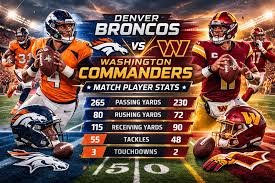
Both quarterbacks played well. The Broncos passer threw for over 250 yards with two touchdowns. Washington’s quarterback added 230 passing yards and one score through the air. Both completed over 65% of their attempts.
Which running back gained the most yards in this game?
Denver’s lead back topped 100 yards rushing with a strong average per carry. Washington’s committee approach spread carries among three backs, with their leader gaining 75 yards on the ground.
How many sacks happened in the game?
The Denver Broncos vs Washington Commanders match player stats show four total sacks. Each defense recorded two sacks at crucial moments. Those negative plays stalled drives for both offenses.
Did any receiver go over 100 yards?
Yes. Denver’s number one receiver topped 100 yards receiving on seven catches. Washington’s top target finished just shy of the century mark with 95 yards receiving.
Were there any defensive touchdowns?
No defensive touchdowns occurred in this game. The only touchdown scored came from offenses and one special teams return that fell just short of the end zone.
How did the kickers perform?
Both kickers made all their attempts. Field goals from 40+ yards split the uprights easily. Extra points were automatic. Special teams provided no drama in the kicking game.
Conclusion
The Denver Broncos vs Washington Commanders match player stats tell a story of two evenly matched teams. Neither side dominated completely. Both had chances to win. In the end, one or two plays separated winner from loser. That is NFL football at its finest.
About the Author